

Dr Sarah Perry / WTSWW
Research
Improving our understanding of Cardigan Bay's marine environment
For 30 years, CBMWC has protected marine life through public engagement, education, and research. Gathering clear evidence is central to our objectives. This research supports marine conservation and community engagement. Historically, our work in Cardigan Bay focuses on marine megafauna. Our data guides conservation decisions and helps us better understand our local waters.
© Maddy De Marchis
CBMWC/WTSWW
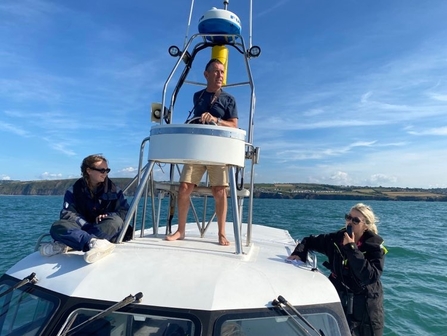
A boat based marine megafauna survey in Cardigan Bay. © CBMWC
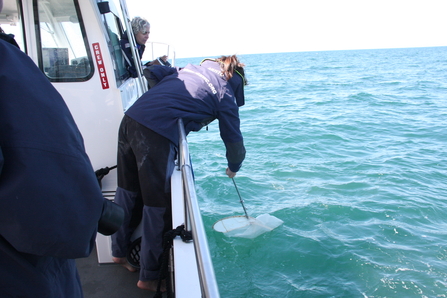
Dr Sarah Perry collecting Bottlenose Dolphin faecal samples. Credit Lyndon Lomax
Boat-Based Surveys
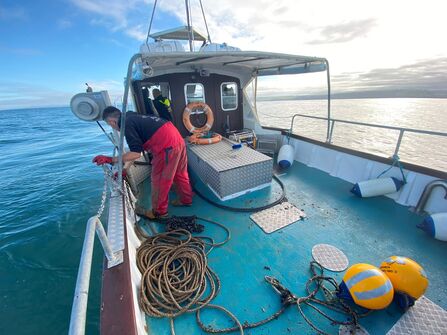
Since the 1990s, CBMWC has collected data from boats to track changes in Cardigan Bay. We do this through a long-standing partnership with Dolphin Survey Boat Trips. This is a good example of conservation and ecotourism. We collect data during two main types of surveys. Opportunistic surveys aboard public wildlife-watching trips. Dedicated surveys when funding allows us to charter the boat specifically for research. These surveys allow us to record weather, water conditions, and wildlife sightings. They also act as a platform for specialist research. We can collect photo-ID photos, acoustic recordings, and water samples.
Photo-Identification
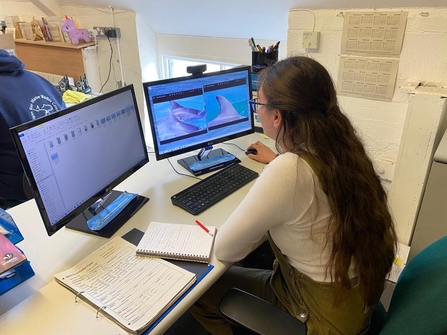
CBMWC began creating a Bottlenose Dolphin dorsal fin photo-identification catalogue in the early 2000s. Since 2005, we have catalogued over 300 well-marked dolphins. Because fin markings change over time, we aim to update this catalogue as often as possible. Securing funding is vital to keep our database current and track individual dolphins. All relevant research activity takes place under licence from Natural Resources Wales.
Acoustic Research
Dolphins rely on sound to communicate, navigate, and hunt. Understanding how they use sound helps us protect them. We have gathered underwater audio in Cardigan Bay for over ten years. We documented the first signature whistles for this Bottlenose Dolphin population. Today, we gather audio using seabed recorders left underwater for months, as well as hydrophones towed behind our survey boat. We work with academic partners, to analyse these underwater soundscapes.
BRUVS
We use Baited Remote Underwater Video Stations (BRUVS) to study marine life without disturbing it. These seafloor camera rigs use a small container of bait to attract fish into view. This lets us measure local biodiversity, fish numbers, and species groups. Using standardised gear and video lengths we can compare different sites and seasonal changes. We can also detect shy or fast-moving species, such as sharks and rays, that might avoid detection.
Environmental Sampling
During boat trips, we collect environmental samples to measure water health and marine life. We gather sea water to test for environmental DNA (eDNA), genetic material naturally shed by animals. We also collect dolphin faeces (poo) using a modified landing net. Using modern eDNA tools, we can identify the exact species living in the bay and what dolphins eat. This gives us information to inform marine conservation.
Land Surveys
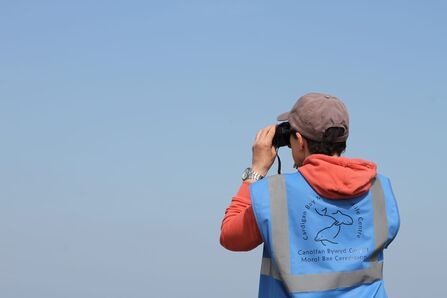
Since the early 2000s, CBMWC has run land surveys from New Quay harbour. New Quay is a busy port, but it is also a major summer hotspot for Bottlenose Dolphins. These shore watches let us count marine mammals, track boat traffic, and check if boaters follow local codes of conduct. We share our data with Ceredigion County Council to support the Dolphin and Porpoise Watch project. Thanks to our dedicated volunteers, we have collected shore data year-round since 2015!


Over 25 years of marine research, conservation and education at Cardigan Bay Marine Wildlife Centre!
Watch this video to find out more information on our research on marine mammals in the Bay and the wider marine environment, and how our work informs policy, management and protection of the area and the Irish Sea.
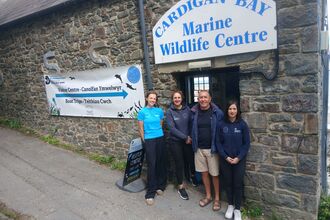
Cardigan Bay Marine Wildlife Centre celebrates its 30th anniversary
The Wildlife Trust of South and West Wales is celebrating 30 years of Cardigan Bay Marine Wildlife Centre.
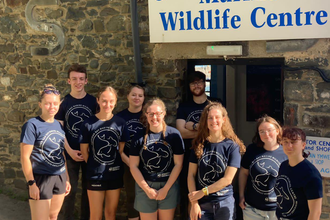
Remembering Heidi Newport
Our Marine Conservation team remember Heidi Newport, volunteer at CBMWC.
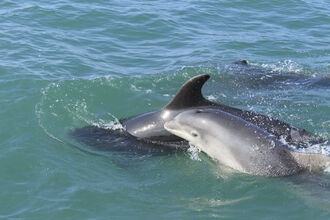
Building the picture about Bottlenose Dolphins
Our Marine Conservation and Research Manager, Sarah, looks back at our Nature Networks Fund Marine Indicator Species project.


